


Source: Office of Science and Technology
Proofread and Edited by the International Cooperation Office
On the morning of July 8, the 2025 National Science and Technology Award Ceremony was held at the Great Hall of the People in Beijing. Capital Medical University (CMU) and its affiliated hospitals garnered four prestigious national awards.
As the primary completing institution, CMU secured one Second-Class National Technological Invention Award and one Second-Class National Science and Technology Progress Award. In addition, Professor Zhang Jun from Beijing Anzhen Hospital, Capital Medical University, participated as the fourth completer in a project that received a Second-Class National Natural Science Award, and Professor Ruan Xiangyan from Beijing Obstetrics and Gynecology Hospital, Capital Medical University, participated as the third completer in a project that received a Second-Class National Science and Technology Progress Award.
National Technological Invention Award, Second-Class
"Key Technologies, Systems, and Applications for Precision Diagnosis of Cerebrovascular Disease Using Magnetic Resonance Imaging"
Primary Completer: Yang Qi
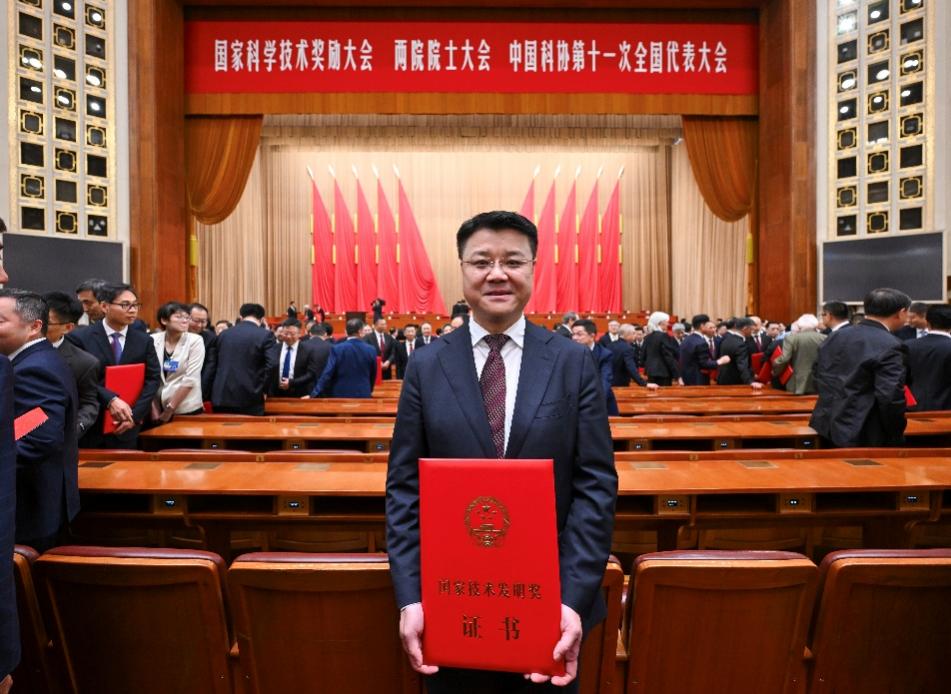
Primary Completers:Yang Qi, Zhao Xihai, Liu Xin, Li Chuanhui, Xu Qin, Zhu Huabin
Primary Completing Institutions: Capital Medical University, Tsinghua University, Shenzhen Institute of Advanced Technology (Chinese Academy of Sciences), Neusoft Medical Systems Co., Ltd., Suzhou Zhongzhi Medical Technology Co., Ltd.
Stroke is the leading cause of death and disability in China, and early accurate identification of high-risk plaques and thrombi is key to its prevention and treatment. To address this challenge, the project team developed a novel method for suppressing complex flow signals around the cerebrovascular wall, improving diagnostic accuracy for arterial plaques and venous thrombi to over 90%. They also designed a head-neck integrated radiofrequency signal receiving device, increasing the detection rate of lesions at the craniocervical junction to 98%. Furthermore, the team developed a mobile bedside MRI system with independent intellectual property rights, enabling rapid and accurate diagnosis of acute cerebral infarction in primary care settings and breaking through the traditional paradigm of imaging examination.
National Science and Technology Progress Award, Second-Class
"Establishment and Application of a Precision Diagnosis and Treatment System for Brain Functional Disorders Based on Deep Brain Electroencephalography"
Primary Completer: Zhao Guoguang
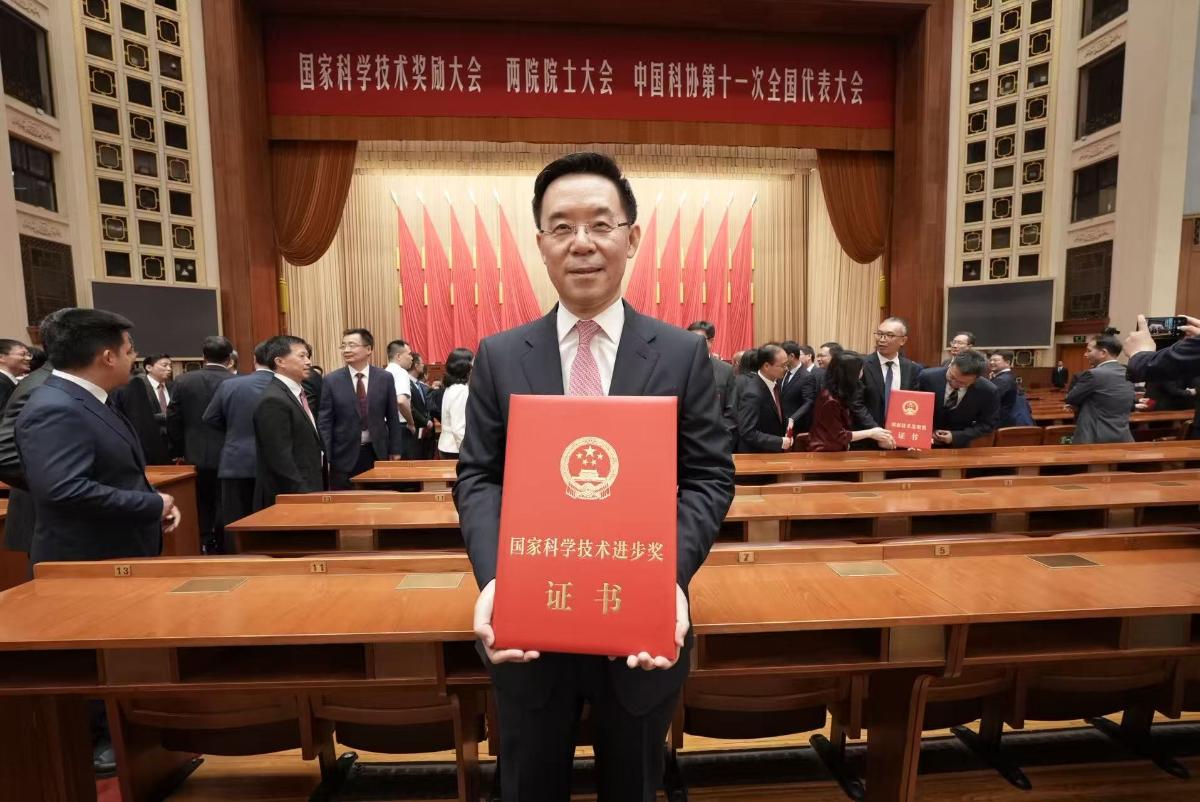
Primary Completers: Zhao Guoguang, Wang Yuping, Chen Biao, Lu Jie, Shan Yongzhi, Ren Liankun, Chen Zhiguo, Piao Yueshan, Liu Da, Zhang Yuqing
Primary Completing Institutions: Xuanwu Hospital, Capital Medical University, Beijing Baihui Weikang Technology Co., Ltd.
The "Establishment and Application of a Precision Diagnosis and Treatment System for Brain Functional Disorders Based on Deep Brain Electroencephalography" project innovatively employed multi-region, long-term deep brain EEG recording and stimulation to decode human brain physiological and pathological activities, breaking through the limitations of imprecise surgical targeting, high procedural complexity, and poor clinical outcomes in the surgical treatment of brain functional disorders, and achieving a series of innovative results in new theories, new devices, and new strategies: first, by analyzing electrical activities in the human cerebral cortex, white matter, and deep nuclei, the team identified electrophysiological biomarkers of abnormal brain networks in diseased states, thereby laying the foundation for precise target localization; second, they overcame critical technological challenges in deep brain EEG acquisition and developed China's first neurosurgical robotic system with independent intellectual property rights, achieving sub-millimeter surgical accuracy, significantly reducing operation time and surgical risks, and promoting its application both domestically and internationally; third, they pioneered novel precision treatment strategies, represented by stereo-electroencephalography (SEEG)-guided radiofrequency thermocoagulation for epilepsy, achieving a leap from craniotomy to minimally invasive surgery, with clinical outcomes leading the world, which have revised international guidelines and textbooks and significantly enhanced China's clinical capacity and international influence in the treatment of brain functional disorders.
Medicine for the people, steadfast in our commitment;
science for the nation, diligent in our pursuit.
Looking ahead, Capital Medical University will continue to anchor itself at the global forefront of medical research, align with the nation’s most critical strategic needs, and strive for more groundbreaking original discoveries—from zero to one—to fortify the health defense of hundreds of millions of people, and contribute our endeavors to the accelerated building of a great China strong in education, science and technology, talent, and public health.